
Modular banking
It all begins with the drive to improve
The problem
-
✺
Westpac's operating costs including technology reached $10.7 billion in 2023.
-
✺
A 200+ year old institution running on a monolithic legacy stack: outdated, expensive and losing ground to challengers built from scratch.
-
✺
The technical solution existed. The harder problem was human - how do you make a room full of executives feel the urgency of a technology transformation whose benefits won't be visible to customers for years? That was the brief I was handed.
My role
I was the lead designer across the end-to-end execution owning the UI design, the visual language of the video and the creative direction that shaped how Modular Banking was communicated to Board level.
This wasn't a production role. I was responsible for the strategic and creative decisions that determined whether the work would land.
DISCOVERY
-
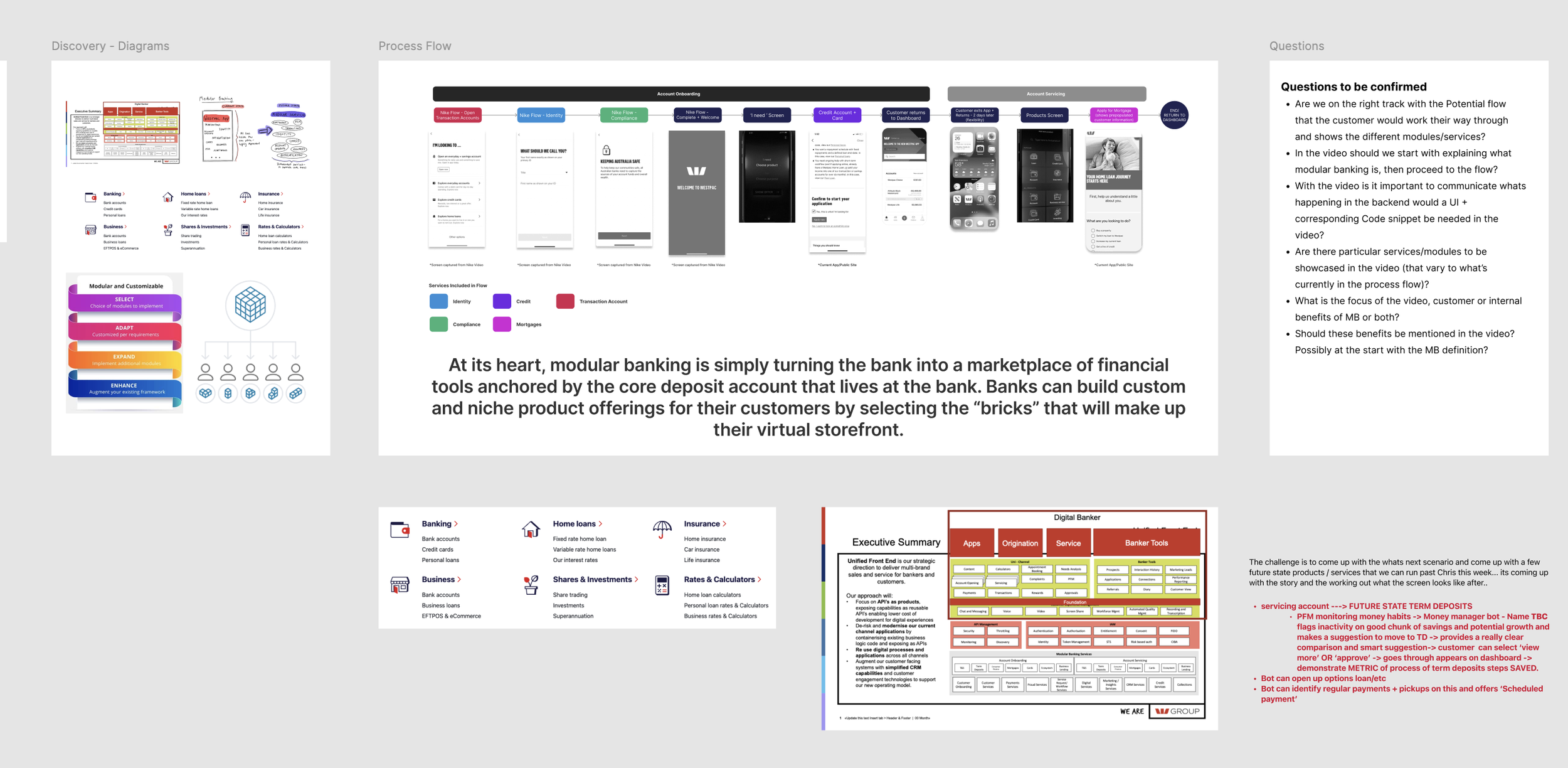
Before a single screen was designed, I needed to genuinely understand the technology. You can't simplify what you don't understand and oversimplifying for an executive audience without depth is a risk I wasn't willing to take.
I ran sessions to unpack Modular Banking from first principles:
What it actually is — breaking the monolithic stack into composable, independent modules.
Services that run only when relevant. A marketplace model for banking functionality.
-
Why customers care - personalised products, optimised interactions, a banking experience built around them rather than the bank's infrastructure constraints.
Why the business needs to act - reduced costs, faster time to market, the ability to experiment without system-wide risk. A genuine competitive advantage in a market where fintechs are moving faster every year.
How it connects to our tech strategy - our three pillars were Fix, Simplify, Perform. Modular Banking delivered all three simultaneously. This framing became the backbone of everything that followed.
Understanding this deeply wasn't just research - it was the foundation that gave me the authority to make strong creative decisions and defend them in the room.
-
I established three principles that would govern every decision across both the UI and the video:
Keep it short and sharp - executives operate in constraint. Every word, every screen, every second of video had to i fy its existence.
Speak 'Executive' without saying it - the work needed to feel boardroom-ready without being corporate-bland. Sophisticated, not stuffy. Urgent, not alarmist.
Visuals do the heavy lifting - in a two-minute window with a non-technical audience, Ul craft and visual storytelling aren't decoration. They are the argument.
THE DESIGN PROCESS
THE DESIGN PROCESS
KICK OFF
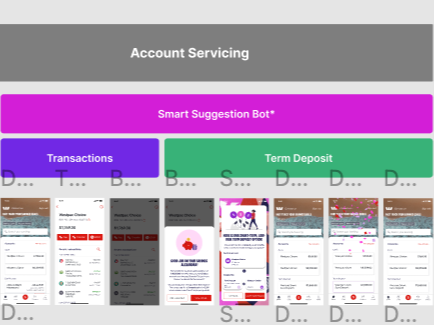
I led collaborative ideation sessions to align the team on the technology and define our creative territory. Once we had genuine depth on Modular Banking, I directed the mapping of products and modules across our two use cases: Digital Identity Verification (DIV) and Term Deposits (TD).
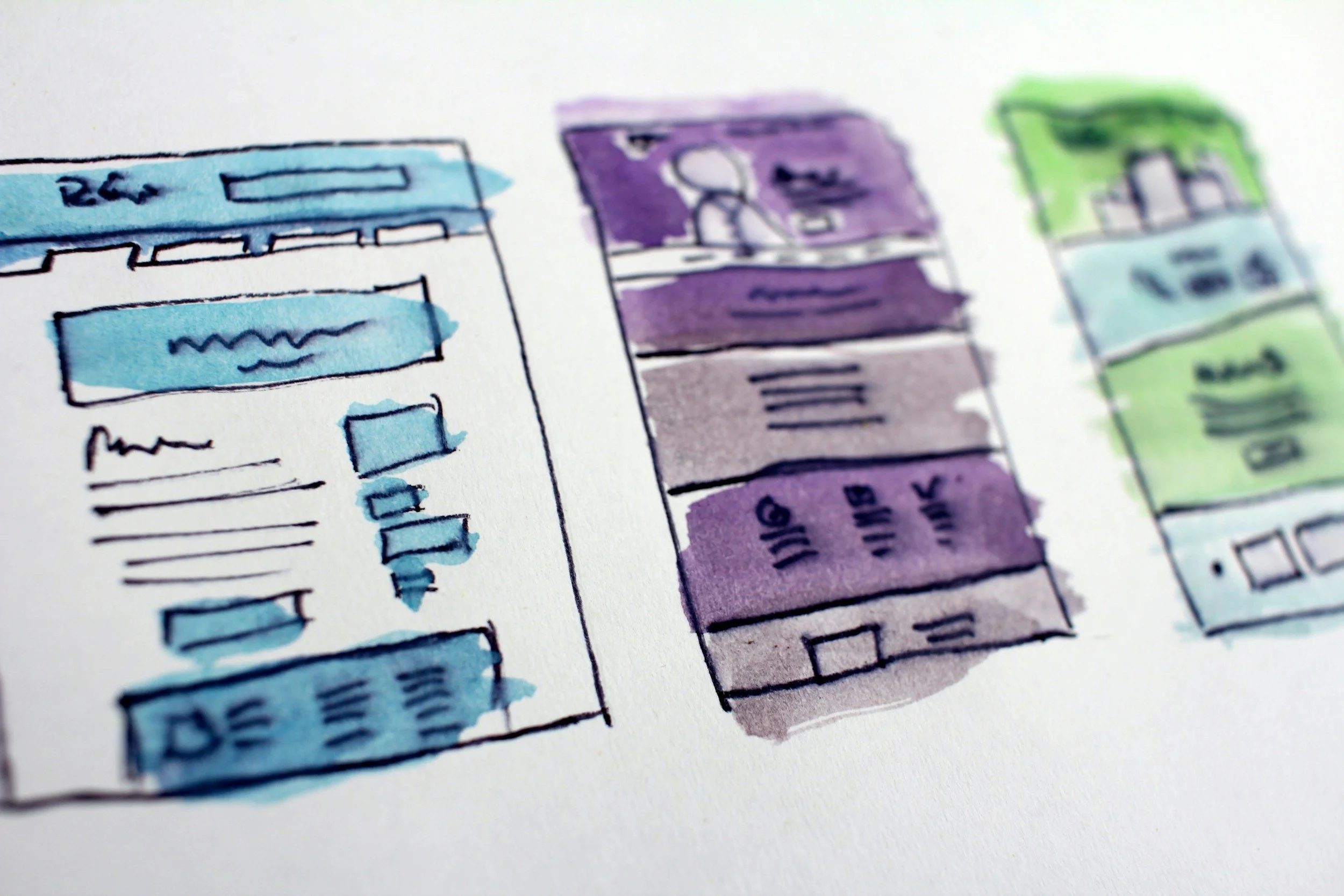
I made the call to sketch user flows before touching Figma — forcing clarity on the key interactions and decisions before any visual work began.
WIREFRAMES
I built comprehensive wireframes across both use cases, establishing the structural logic and flow before any visual decisions were locked.
Critically, I brought senior stakeholders into this process early. In a project with this many technical constraints, getting alignment at wireframe stage
— not prototype stage - meant we avoided expensive rework and kept engineering, design and business teams moving in the same direction.
Every round of feedback was incorporated with a clear rationale. Stakeholders weren't just reviewers — I positioned them as collaborators, which meant by the time we reached high fidelity, there were no surprises.
HIGH-FIDELITY DESIGNS
With structure and feasibility validated, Hed the high fidelity execution, applying Westpac's brand system with intention, not just compliance.
The design decisions I made at this stage were deliberate: visual treatments that made the reduction in user interactions impossible to ignore and a Ul language that made Modular Banking feel modern and inevitable rather than experimental and risky.
The goal was a prototype that changed how executives thought about the investment.
PROTOTYPE
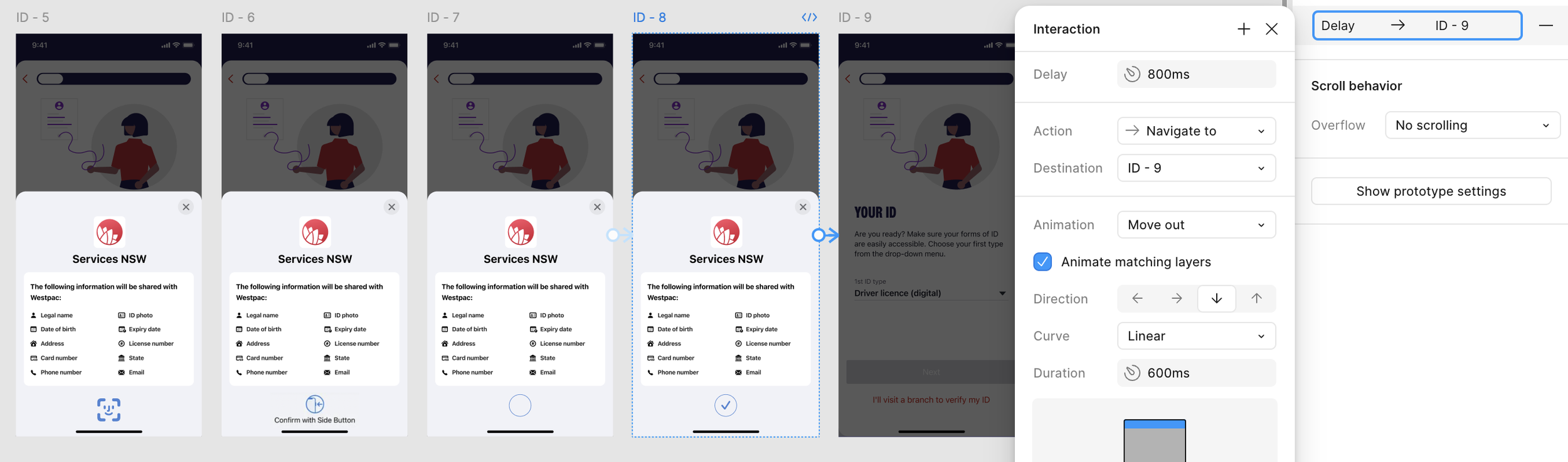
I built a fully interactive prototype in Figma - testing and refining every animation timing and transition until the experience felt seamless. I then recorded and transitioned to Rotato to produce polished 3D app mockups that elevated the presentation quality significantly.
This level of prototype fidelity was a deliberate choice. At Board level, the quality of what you show signals the quality of what you're proposing.
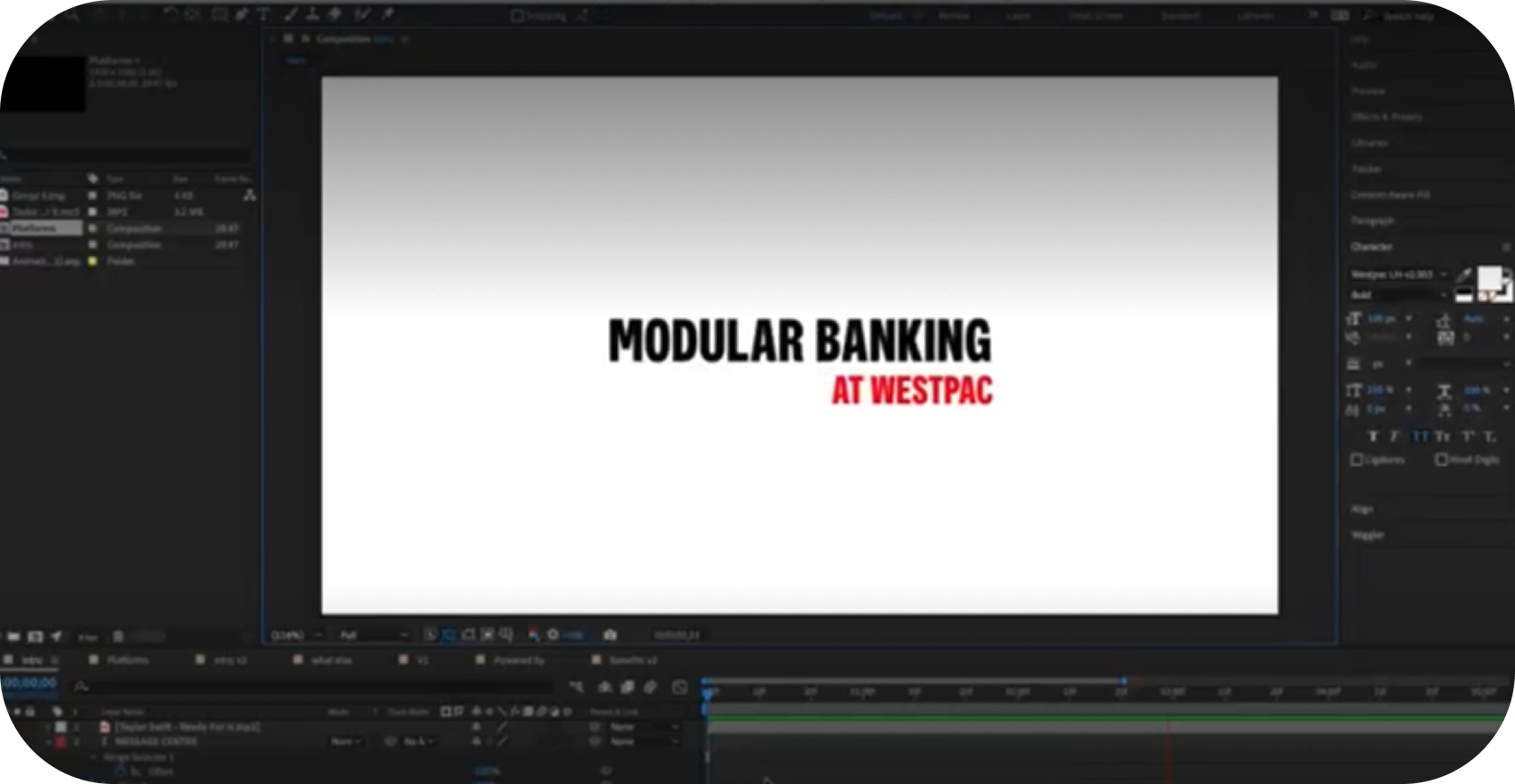
THE PRODUCTION
V1 went to our CIO. The response: minor text refinements  and genuine astonishment at the quality of execution.

V2 was the version presented to the Board.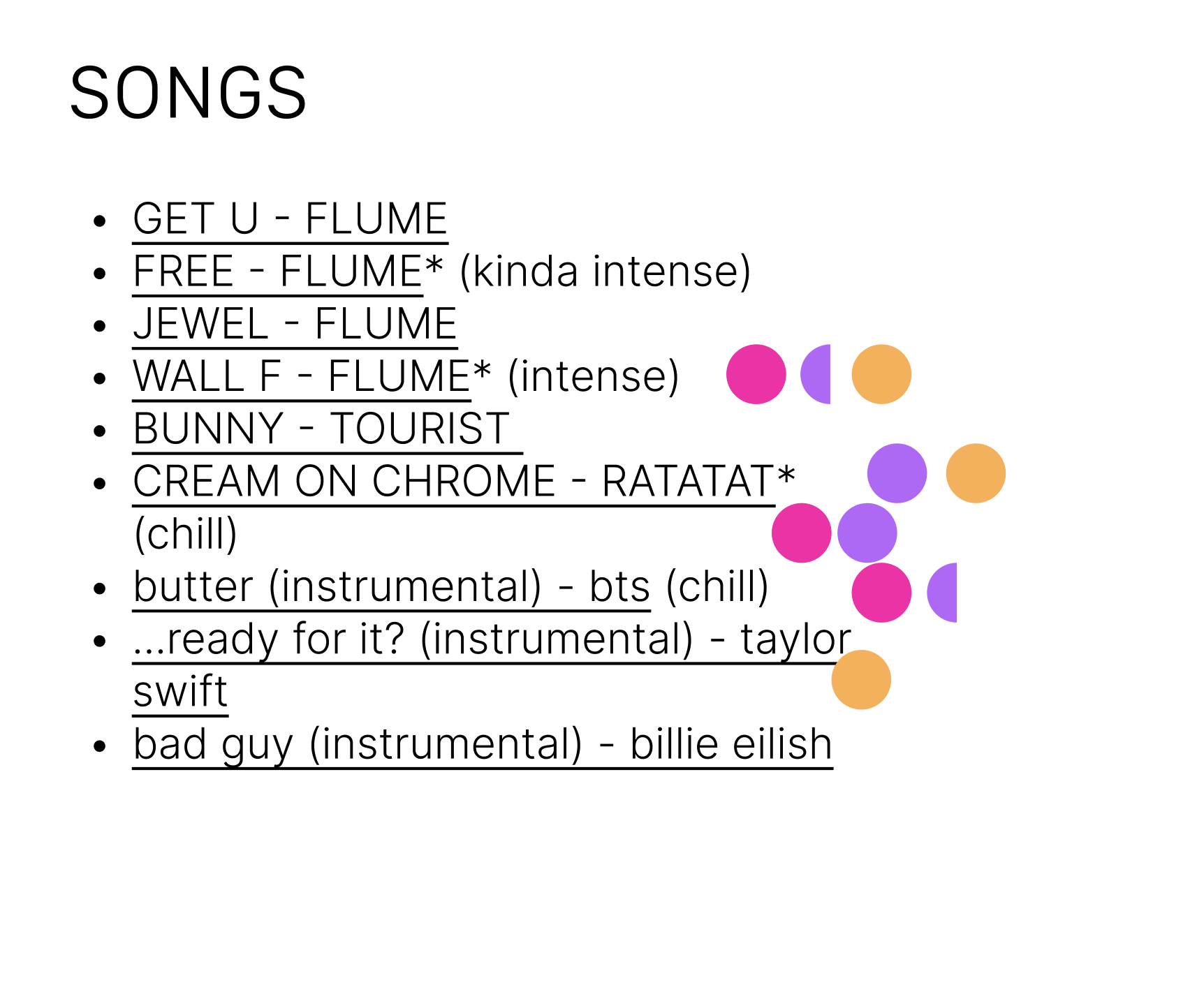
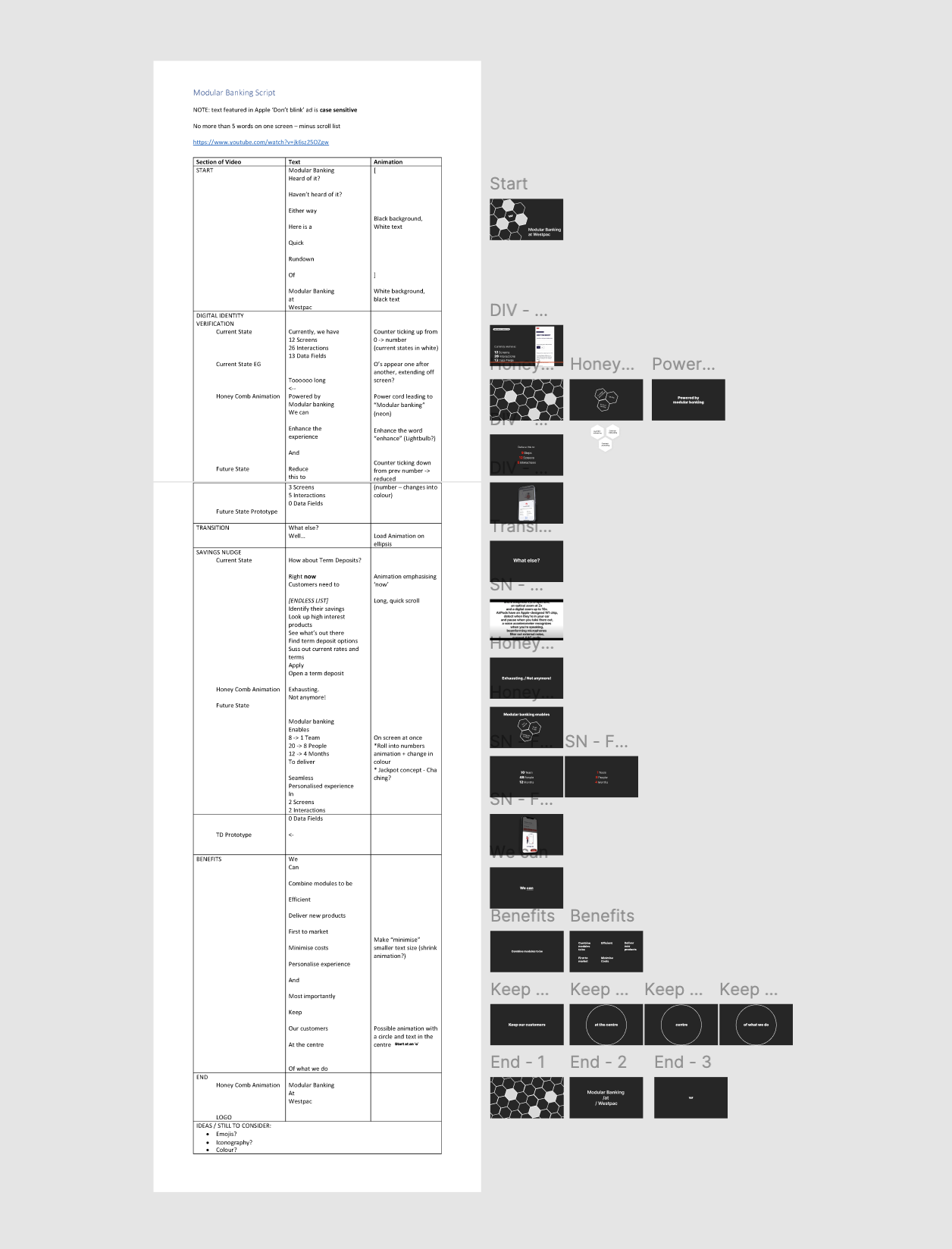
THE MUSIC
VIDEO & SCRIPT
This is where the project became something unusual for a design team to own.
I led the creative vision for the video end to end including the visual language, pacing, structure and aesthetic were decisions I drove. The goal was a two-minute piece that would make a complex technology transformation feel urgent, credible and exciting to people who had never heard of Modular Banking.
I worked with a team member to develop the script - fast-paced, plain language, structured to build tension and land the business case with clarity. We presented V1 for approval before moving into production, ensuring alignment before any significant effort was committed.I made the deliberate decision to use Flume. The track had to do two things simultaneously: establish a modern, forward-facing tone from the first second and hold an executive audience's attention for the full two minutes.
Every beat was timed to the edit intentionally. This wasn't a small creative call. Music sets emotional register before a single word lands and for an audience being asked to fund a multi-year transformation, the emotional register had to be exactly right.
THE OUTCOME
By combining impeccable high-fidelity visuals with strategic metrics and intentional storytelling, our leaders walked away with a clear understanding of Modular Banking and that we as an organisation need to take action.
The project not only secured stakeholder alignment but was critical to securing funding for a multi-phase technology upgrade (this would later be called UNITE).
I received personal feedback for various senior leaders on how impressed they were with the quality and that our team has set the standard and will be to go-to’s for this type of work. Indeed this has since become a reference asset across teams and we have since been requested to create many more examples of design communicating innovation within Westpac.
THE OUTCOME
The video did what it was designed to do.
Our leaders walked away with a clear understanding of Modular Banking and — more importantly - a clear conviction that Westpac needed to act.
The project secured executive alignment and unlocked funding for a multi-phase technology transformation program later named UNITE.
Senior leaders provided personal feedback directly to me on the standard of the work. The video became a reference asset across Westpac and the team was commissioned to produce further work communicating design-led innovation across the Group.
REFLECTION
The Modular Banking pushed me into territory that most designers don't get near: owning the creative strategy behind a Board-level investment case, not just the execution of it.
What I learned about leading at this level:
Strategic clarity is a design output - the most important design decision I made on this project wasn't a UI choice. It was the decision to deeply understand the technology before picking up a tool. That understanding gave every subsequent decision its authority.
Lead with conviction, invite collaboration - bringing stakeholders in early and often wasn't just good process. It was how I built the trust that allowed bold creative decisions to land without resistance.
The work has to work in the room - prototypes, videos and decks aren't deliverables. They're arguments. Design them like the outcome depends on it. In this case, it did.
I'll continue to bring this approach strategic, cross-functional, unafraid of complexity — to every team Head.