
ACCESSIBILITY SETTINGS
It all begins with designing for everyone
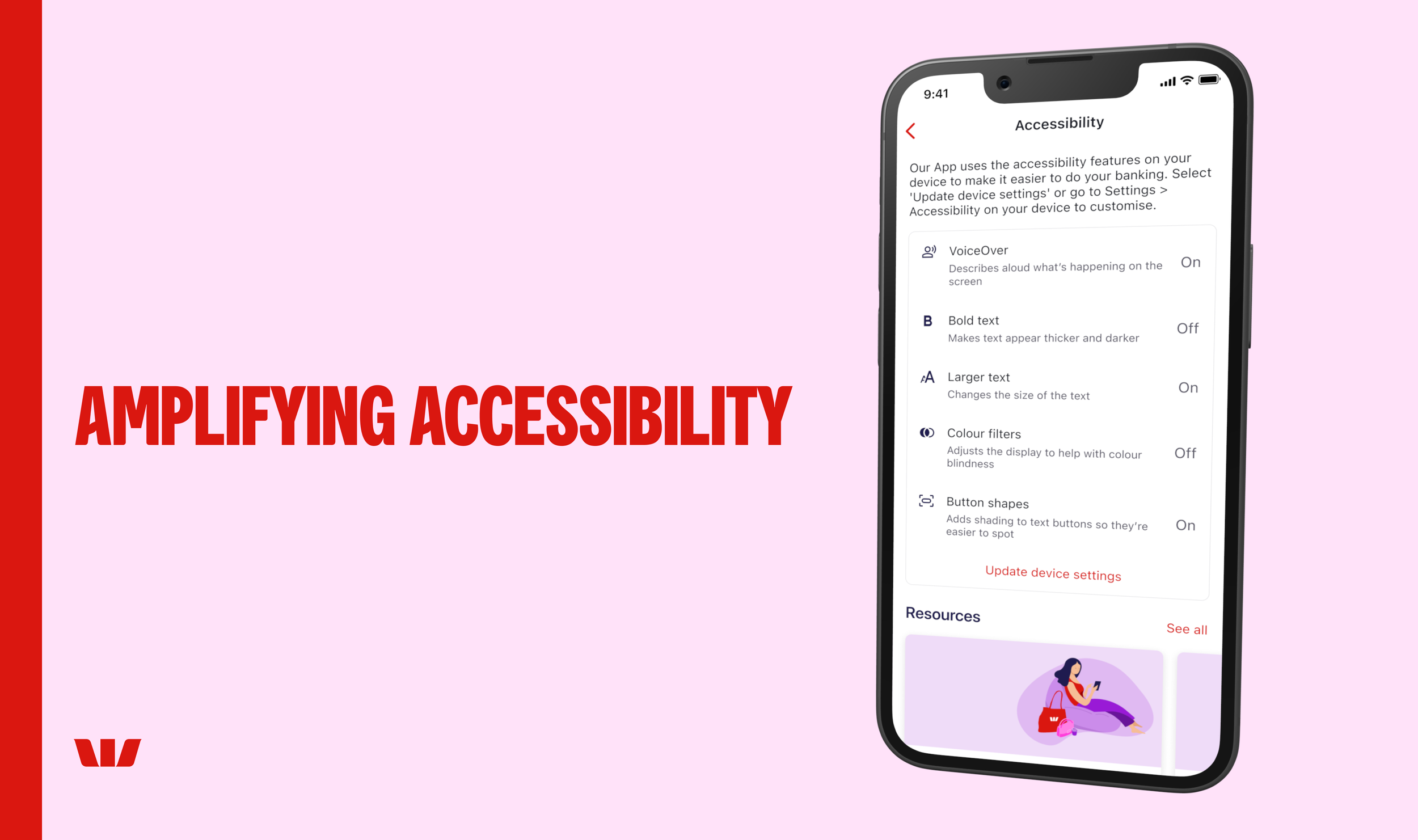
What’s the problem?
-
✺
5.5 million Australians (21.4%) identify as having permanent disability
-
✺
Changes to Banking Code of Practice 2025. We are committed to providing Banking Services which are inclusive and accessible for all customers
-
✺
Current discoverability of accessibility capability in Settings. No accessibility education available in app

GUIDING PRINCIPLES
Three principles shaped every decision on this project:
Include, don’t approximate - Real feedback from real users with disability was non-negotiable. We partnered with Westpac’s Access and Inclusion team throughout, including direct sessions with the team leader, who is visually impaired.
Sustainable over heroic - Rebuilding accessibility controls natively would have created ongoing maintenance risk as Apple and Samsung evolve their APIs. The right solution was one that would hold up over time - not just at launch.
Discoverability is part of the experience - A feature no one can find is a feature that doesn’t exist. Entry points were designed thoughtfully across multiple surfaces to ensure customers could find accessibility settings however they navigated the app.
UNDERSTANDING THE PROBLEM
Financial apps are built for the average user, but the average user doesn’t exist. ABS data told us that 5.5 million Australians live with some form of disability.
Internal data reinforced this gap. Customers whether they are living with vision, motor or cognitive needs struggled navigating and discovering accessibility capabilities within our app. The opportunity was clear: give customers the tools to make our banking app work for them.
The core question wasn’t just what to build - it was how to build it responsibly, sustainably and in a way that would genuinely serve users rather than tick a compliance box.

STRATEGIC DECISION
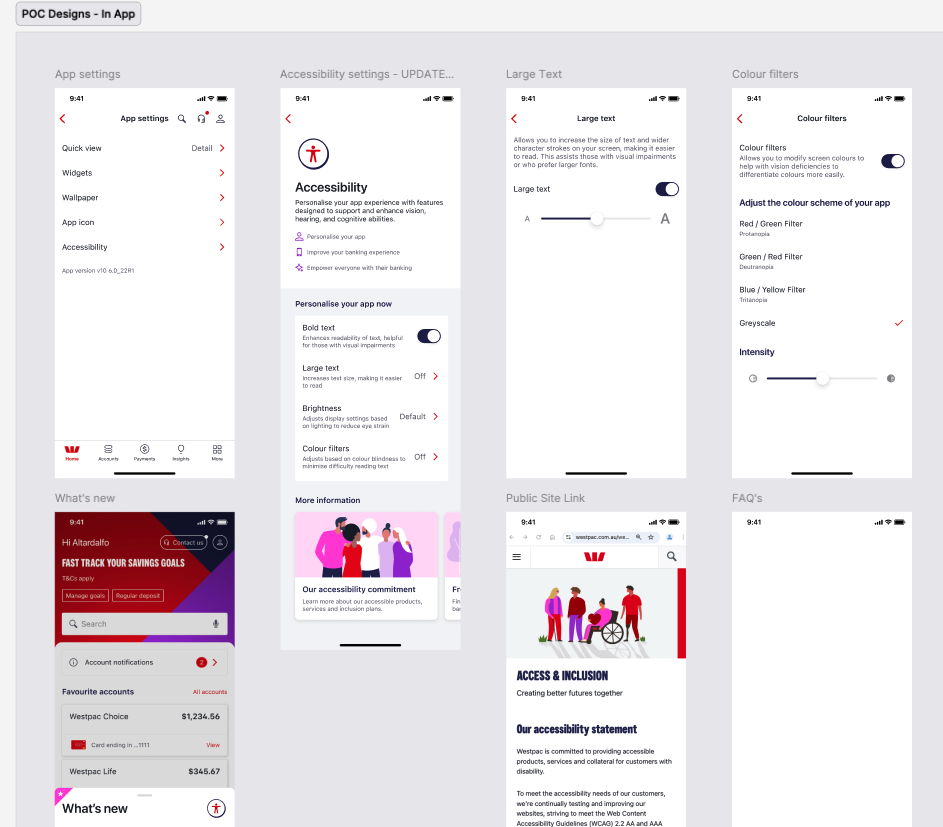
The central design and technology question was whether to rebuild accessibility controls natively within the app, or surface existing device settings and navigate users there directly.
Rebuilding would mean owning every state, every OS update and every API change, with no guarantee our implementation would stay in sync with how Apple and Samsung evolve their native accessibility features.
From both a user experience and technology implementation perspective, the smarter solution was clear: navigate users to their device settings, where they can make changes that the Westpac app inherits automatically.
This decision was reached collaboratively with technology, UX and business stakeholders - and it held up. It was the right call.
Android
DESIGN
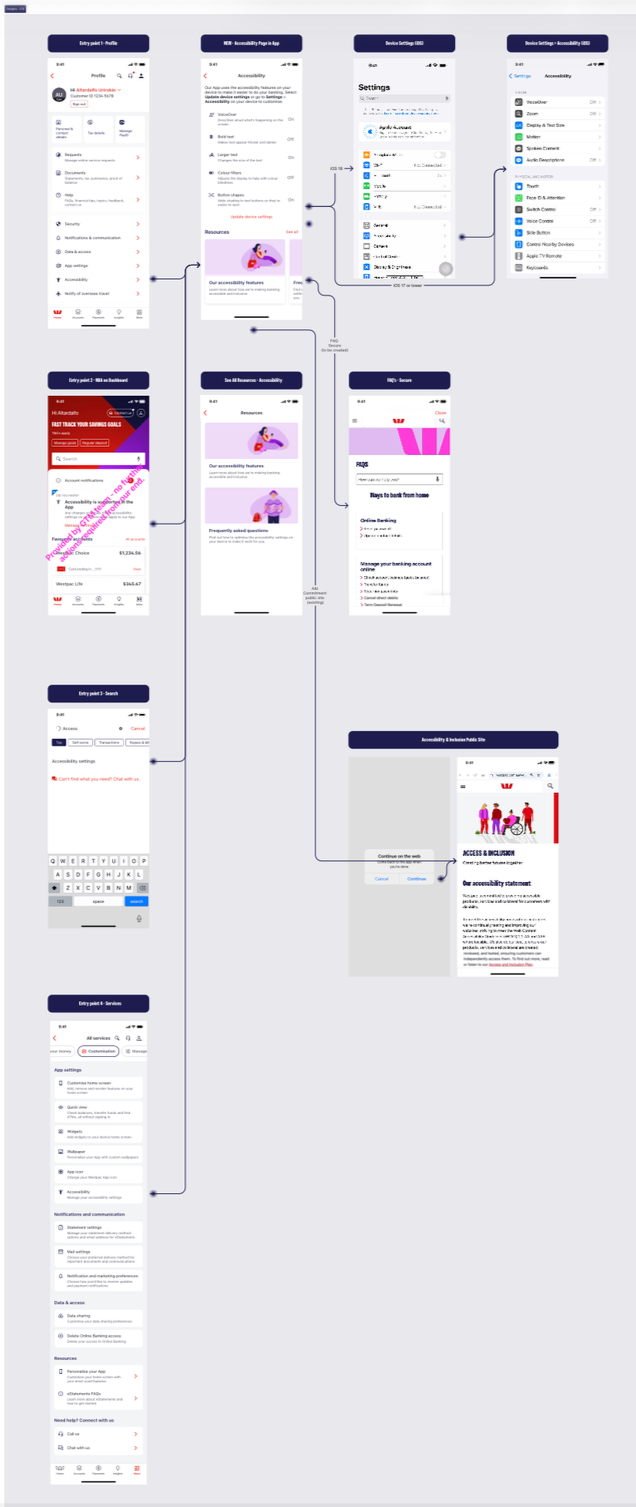
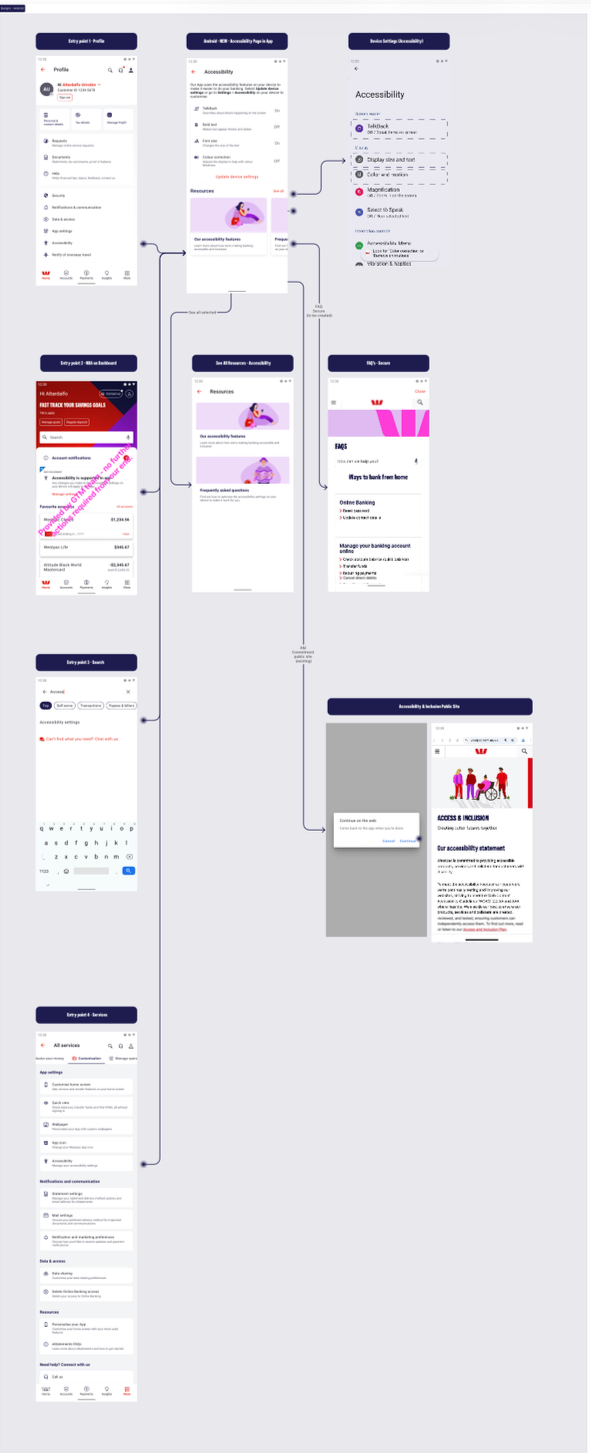
I designed four entry points to ensure discoverability across different user journeys:
Profile
The NBA banner on the dashboard
Search
More/All Services page
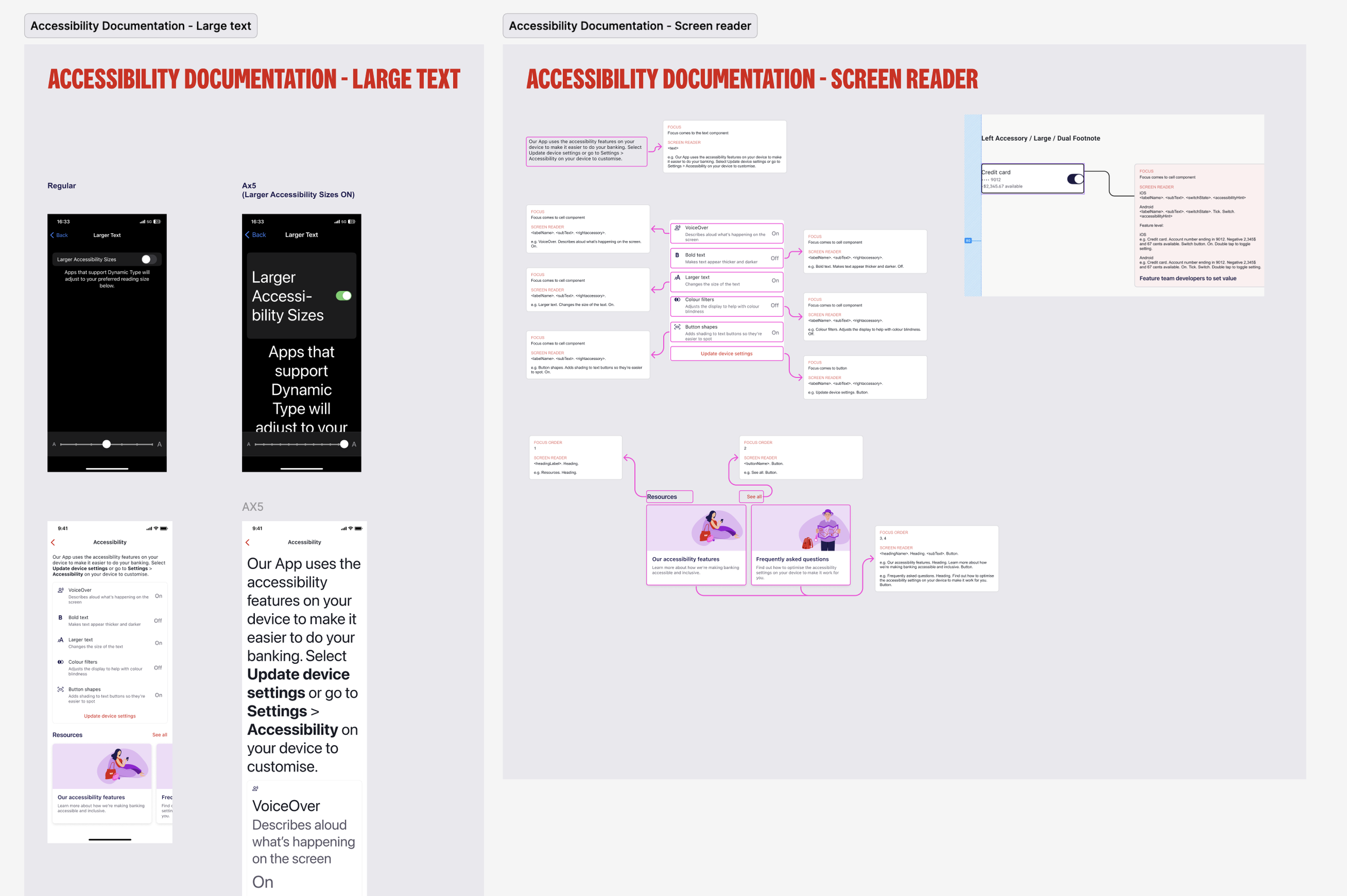
Each led to a single, focused accessibility hub page that clearly listed the supported features and guided users directly to their device settings to make changes.
QA and Accessibility testing was completed across all six features and every enabled combination to ensure nothing broke in context, not just in isolation.
iOS
WORKING WITH THE ACCESS & INCLUSION TEAM
Sign-off came from Westpac’s Access and Inclusion team, including direct feedback sessions with the team leader, who is visually impaired. This wasn’t a checkbox exercise - it was a genuine collaboration that shaped how we communicated each feature and completion of testing across enabled accessibility features and validated across all permutations to ensure no regressions.
ATTENTION TO DETAIL
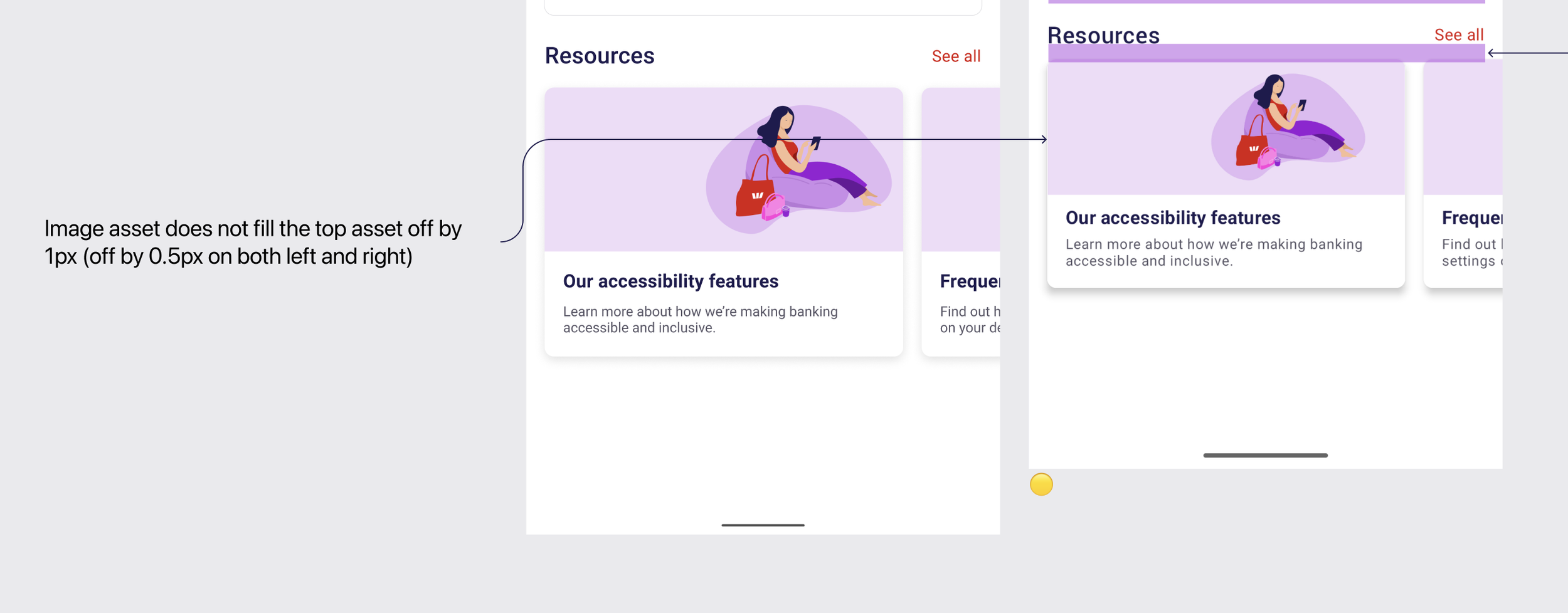
During testing I identified a 0.5px gap between the image asset and the border on the article tile on Android - a small cosmetic defect at the component level, but one that mattered. I raised the defect, reached out to the component team and tracked it through to resolution. Details like this don’t fix themselves and I believe that following through beyond handoff is part of the job.
IMPACT
34,478
UNIQUE USERS
IN FIRST 4 MONTHS
OF LAUNCH
+1 POINT
CONTRIBUTED TO WESTPAC’S FORRESTER SCORE
REFLECTION
REFLECTION

Leading the Accessibility Settings project was one of the most meaningful projects I have worked on throughout my career.
My key takeaways include:
Making hard but right strategic decisions - Deferring to native iOS and Android accessibility settings rather than building our own was the right experience decision and the cost-benefit was clear.
Research is essential - Insights across the Banking Code, ABS and Westpac data were used to shape decisions around what features are utilised and relevant to our customers and it gave us confidence to push back on any assumptions.
On device testing is a non-negotiable - I was determined to complete hands on testing this way we can be sure everything is working and validate the experience.